
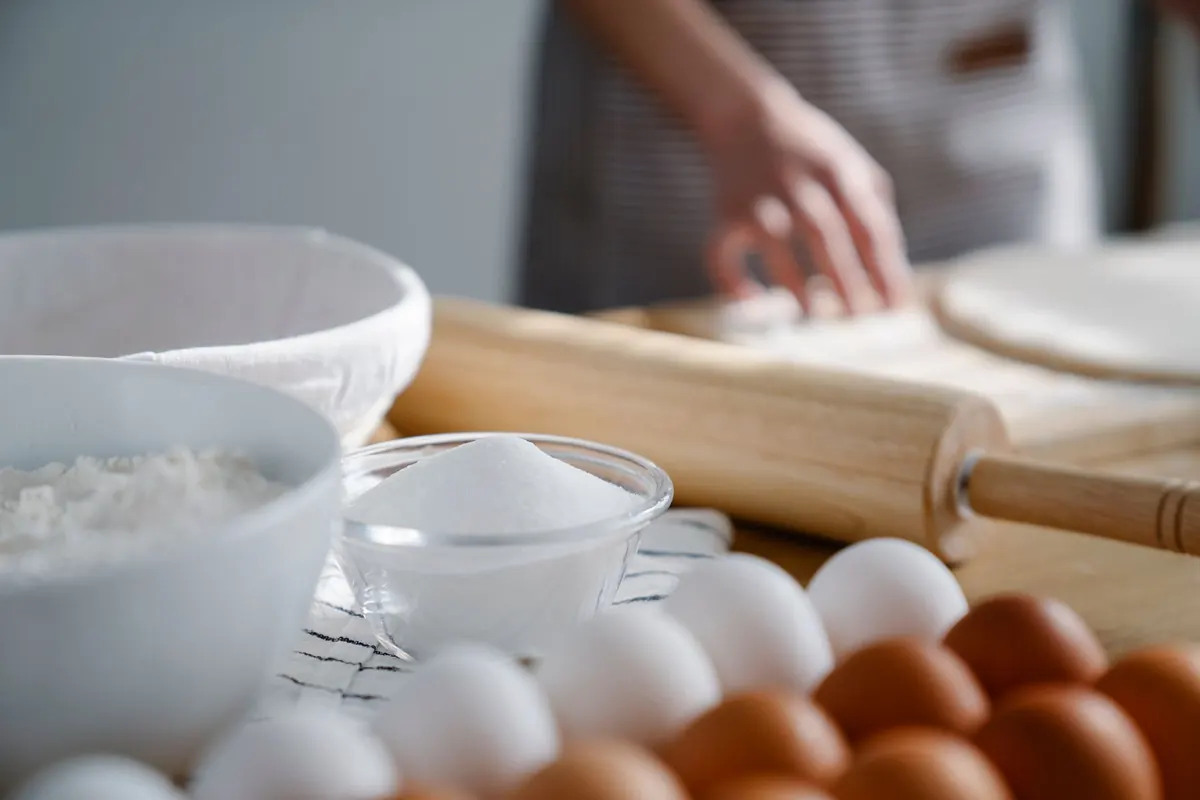
British baking recipes carry a vocabulary of their own. One paragraph asks you to cream butter and sugar, the next to rub in, fold, prove and bake blind — sometimes all in the same recipe. None of it is difficult. These words are shorthand for ordinary hand movements, and once you have done each one twice, the instruction stops being a puzzle and becomes a cue.
Ingredients that go by other names
Start with the shopping list. British recipes name ingredients differently, and no technique will save you if you have bought the wrong bag of flour.
- Plain flour – all-purpose flour, with no raising agent.
- Self-raising flour – plain flour with baking powder already added. If you only have plain, sift 150g plain flour with 2 teaspoons of baking powder.
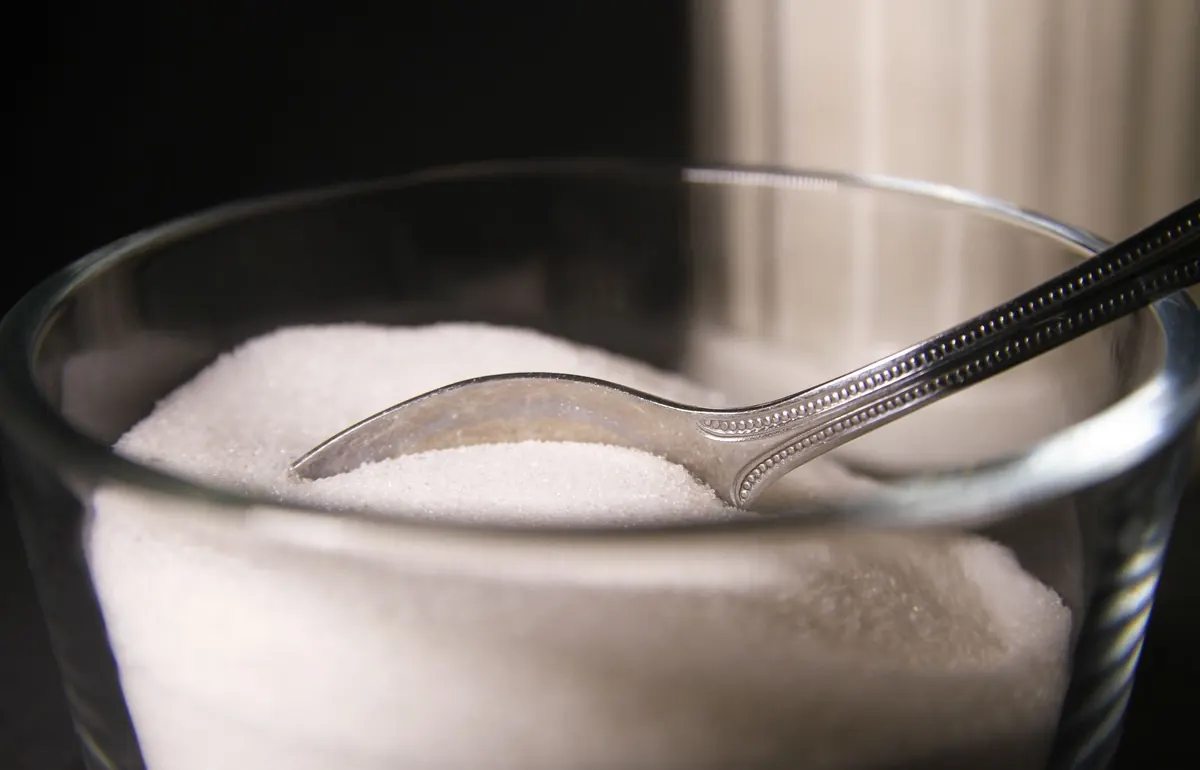
- Caster sugar – finer than granulated, so it dissolves quickly. Granulated works, but gives a grainier crumb.
- Icing sugar – powdered or confectioner's sugar. Demerara is crunchy and golden, good for sprinkling.
- Golden syrup – a thick amber syrup. Black treacle is darker and more bitter.
- Cornflour – cornstarch.
- Double cream – heavy cream that whips. Single cream is thinner and will not hold a peak.
- Digestive biscuits – the usual base for no-bake cheesecakes and tiffin.
Dried fruit matters too: currants are tiny and sharp, sultanas golden and soft, raisins larger and darker. Swapping one for another changes the character of a fruit cake.
Weights, gas marks and fan ovens
British recipes weigh in grams and millilitres rather than measuring in cups, which is a gift. A cup of flour holds a different amount depending on how you scoop it. A digital scale takes ten seconds and removes the guesswork.
Oven temperatures come with a gas mark alongside the degrees, a leftover from British gas ovens. Gas 3 is 170°C, Gas 4 is 180°C, Gas 6 is 200°C, and "moderate oven" almost always means Gas 4. Fan ovens run hotter, so reduce the temperature by about 20°C and check a few minutes early. An oven thermometer tells you more about your oven than the dial does.
Mixing verbs: cream, rub in, fold and beat
These four words cover most British cake-making, and each describes how much air you are trying to trap.
Cream means beating soft butter and sugar until the mixture turns pale and feels less gritty — three to five minutes with an electric hand mixer, longer by hand. This traps the air that makes a sponge rise, so do not rush it.
Rub in is for pastry, scones and crumbles. Cut cold butter into cubes, add it to the flour, and lift and crumble the mixture with your fingertips, keeping your hands above the bowl so the butter stays cool. Stop when it looks like coarse breadcrumbs. Warm hands and soft butter make a greasy paste instead.
Beat is brisk and energetic, used for batters and smoothing out lumps. Whisk is what you do to eggs and cream for volume; whisked eggs are ready at "ribbon stage", when the trail from the whisk sits on the surface for a moment before sinking.
Folding, step by step
Folding is the gentlest of the lot, and it exists to protect the air you have already beaten in.
- Add the flour or whisked egg whites to the mixture.
- Cut down through the middle with a large metal spoon or flexible spatula.
- Sweep across the bottom of the bowl and lift the mixture up and over itself, turning the bowl a quarter turn each time.
- Stop while a few faint streaks remain. They disappear as you fill the tin, and over-mixing now gives you a dense, rubbery cake.
Pastry talk: blind baking, resting and crimping
Blind baking means baking a pastry case without a filling. Line the tin with pastry, prick the base with a fork, cover with baking paper and fill with baking beans or dried rice. Bake, then lift out the weights and paper and return the case to the oven for five to ten minutes to dry the base. Skip this and a wet filling soaks into raw pastry.
Resting is the instruction people ignore. After handling shortcrust, wrap it and chill it for twenty to thirty minutes before rolling. The gluten relaxes, the butter firms, and the pastry is far less likely to shrink down the sides of the tin.
Smaller words matter too. Crimp means fluting the pastry edge. Glaze means brushing with beaten egg or milk for colour. Dredge or dust means sprinkling icing sugar over a finished bake.
Dough, proving and knocking back
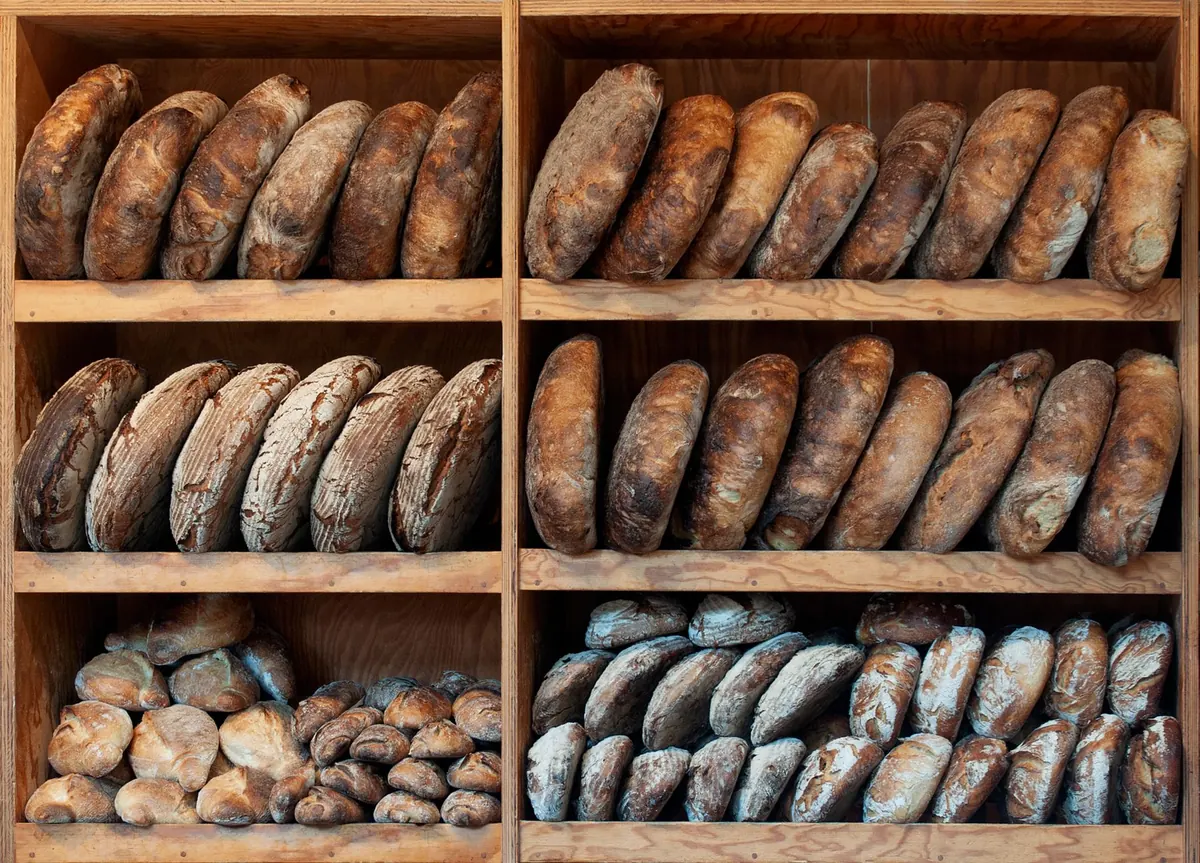
Yeasted recipes have their own vocabulary. Knead means working dough until it is smooth and elastic, usually eight to ten minutes by hand; it should spring back when pressed. Prove means leaving it covered in a warm place until roughly doubled in size. Go by how it looks rather than the clock — a cool kitchen can double the time a recipe suggests.
Knock back is the satisfying part: pressing the risen dough down to release large air bubbles, then shaping it for a second prove. Score means slashing the top of a loaf with a sharp blade just before baking, so the dough has somewhere to expand.
The named bakes: sponges, traybakes and puddings
Some terms are not techniques but names of things, and knowing them helps you judge what a recipe is asking for.
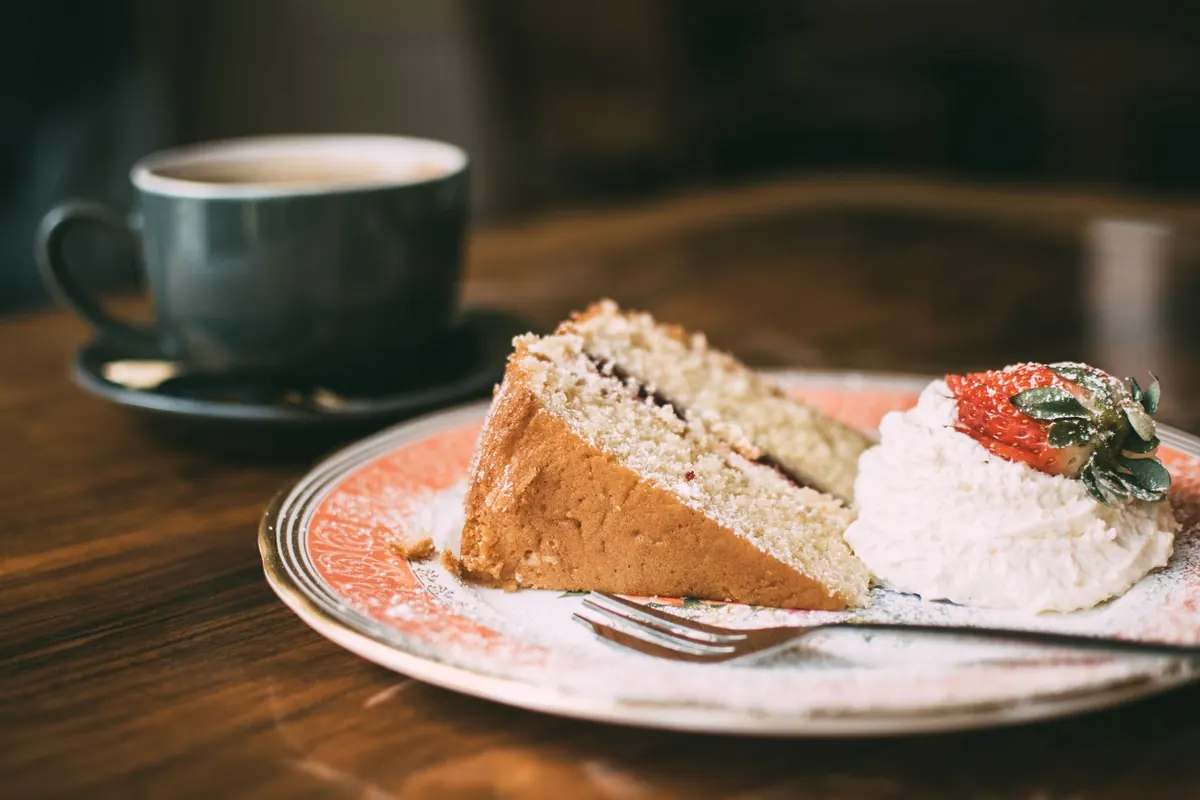
A Victoria sponge is equal weights of butter, sugar, flour and eggs, baked in two tins and sandwiched with jam and cream. A traybake is anything baked in a rectangular tin and cut into squares. Fairy cakes are small and plain; butterfly cakes are fairy cakes with the top cut out and refilled with cream and jam. Rock cakes are rough, fruit-filled and deliberately lumpy.
A biscuit in Britain is crisp and made for dunking, where a cookie is softer. A pudding can mean dessert in general or a steamed sponge such as sticky toffee pudding. A Swiss roll is a whisked sponge rolled around jam while still warm, before it cracks.
Putting it into practice
Read the whole recipe twice before you touch anything, then weigh everything out first. Measure your tin, preheat properly, and resist opening the oven door for the first two-thirds of the baking time. Keep a pen by the recipe and note what you changed and how it turned out.
If a term still trips you up, practise it once with nothing at stake: rub butter into flour for a crumble, or blind bake an empty case and eat the pastry. Confidence with British recipes is mostly familiarity, and familiarity comes quickly.
Photo: Felicity Tai / Pexels
Related posts
More stories you’ll love reading